An introduction into amateur radio and why YOU should pick it up as well ... outdoor edition
- DO7JZ
- Amateur radio , Beginner
- January 4, 2024
Outdoors you will encounter areas without any cellpone service. Places you may actively look for in order to get away from the stress of your daily grind. However, being able to communicate will be crucial for raising emergency services or your friends and loved ones.
Tl;dr:
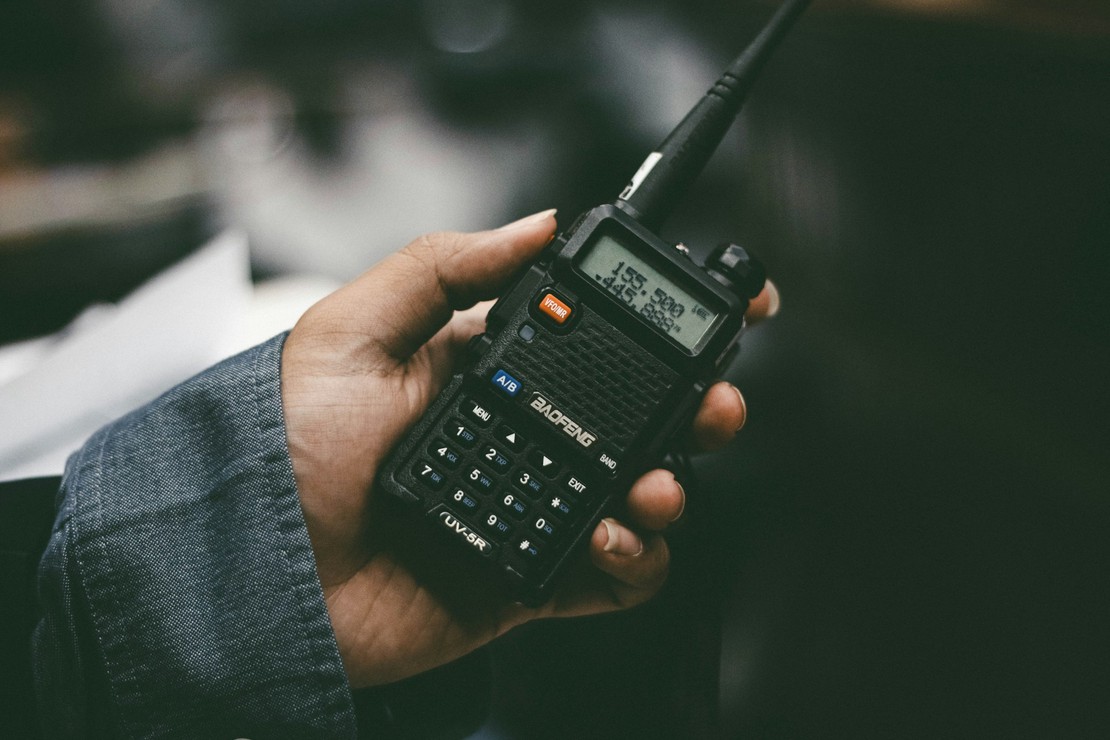
Amateur radio is a worldwide service that allows you to communicate with other radio amateurs. Due to the nature of short wave radio you can reach other stations several thousand miles away with something that fits into a small backpack, or even less. Amateur radio operators world wide operate so called repeaters that will boost your signal. Chance is that the area you want to go to, has coverage of such repeater but not cellphone coverage often is quite high if you stay in developed countries. Those repeaters can be used with a handheld radio as seen in the picture.
There are services like Garmin InReach, Spot or satellite phones to deal with some of those problems and those play a crucial role for your safety if you are in really remote areas with no one around for miles on end.
While these services are almost mandantory for expedition style excursions, they are very costly and don’t solve the need to communicate within your group.
There is one service that works world wide and actually very well can complement or replace satellite based services altogether. It’s called amateur radio, or sometimes referred to as ham radio.
With amateur radio you can communicate over long distances (several thousand miles) or within a few kilometres, depending on your usecase. You also can send and receive emails, get weatherforecasts and much more, without any infrastructure other than what you carry with you.
In expedition type scenarios it always is a good idea to have a radio operator with you, to have another form of getting information or calling for help/assistance.
When I am out hiking with my family, I always bring my radio and a good external wire antenna to reach out for help in case of an emergency. I once needed to call emergency services for a seriously injured hiker, but had to treck several kilometers until I had cellphone reception. This incident was one of the reasons for me to dive into amateur radio. However, there is no guarantee that you will reach someone. But there are plenty recorded incidences where amateur radio saved people from serious harm since they could reach someone and get the help they needed.
Licensed to transmit
The path to licensed Amateur Radio Operator usually starts with the desire to transmit or receive data and voice away from the beaten path or with more power than those free services such as CB, PMR or GMRS allow you to do.
Every country has it’s own rules when it comes to wireless transmissions, with a few international rulesets that are universally accepted. Think bluethooth, wifi, ISM bands and such. However almost all countries allow amateur radio operators to use their bands. Most of the time you have to apply for a local license and pass a test showing you’ve knowledge about electronics, safety, rules and regulations. However a license from your country will most likley be accepted for a short period of time in the country you’re visiting. Or you can test online for a license in the USA or Great Britain (which have the benefit of using english as their language and allowing remote testing) and then use that license to operate in the country youre visiting as those are widley accepted.
Usually those license tests are multiple choice and ask about rules, national and international law regarding amateuer radio as well as technical electro engineering things that are highly technical.
I’ve not payed much attention to physics in school since I didn’t see the need to, and also had trouble following my teacher in what he was trying to explain. However I’m glad that amateur radio gave me the desire to brush up on those skills. And don’t worry, it’s not too hard to learn. Most countries even have a tier based system, so the easier licenses are usually not too hard for non technical people.
Info
There are plenty of study materials. Books, Youtube-channels, apps, audio books, websites and much more. See the link list in the bottom.
Alright, I’m licensed, what now?
Once youre licensed, you can dive into the more traditional aspects of ham radio. Shortwave voice communication being one example. With 5 watts of transmit power and a homebrew antenana you can reach other amateur radio operators several thousand kilometers away.
With morse code this distance even expands since it is not only a UNESCO world heritage but also a very energy efficient mode. And it’s kinda cool to be fluent in the art of morse code.
You now also can use handheld radios on repeaters, talk to your buddies (who also have to be licensed) on the trail or your local friendly amateur radio operator who is monitoring a frequency in case you have an emergency or need any form of assistance.
You now also can use a shortwave radio, not only to listen to music or news broadcasts, but also to make contacts with people form all over the world. There even are amtaeur radio games such as Parks on the air, which allow you to combine two hobbies (outdoors and radio).
But there is much more
Did you know that there are amateur radio satellites? Or that the International Space Station has a ham radio repeater? Or that you sometimes can talk to the astronauts directly, since most of them are licensed as well?
We also have a wide area wifi network called Hamnet/Arden Net, we have a worldwide network for those old pagers, theres repeaters for handheld radios all over the planet, most of them interconnected via the internet or Hamnet/ARDEN.
Some people use the moon, airplanes or even meteors to bounce their signals off of. And of course, some of our bands are usable for radar, and other cool applications.
You can invent your own digital modes of operation. In fact, the M17 project is doing so right now. Including development of open hardware to accompany their new mode.
Conclusion
Of course, I only can scratch the surface and give general hints and primers into what is possible in this text. However, in this blog I’ll explain some things and cool projects in detail, so keep browsing around and come back later for more. :)